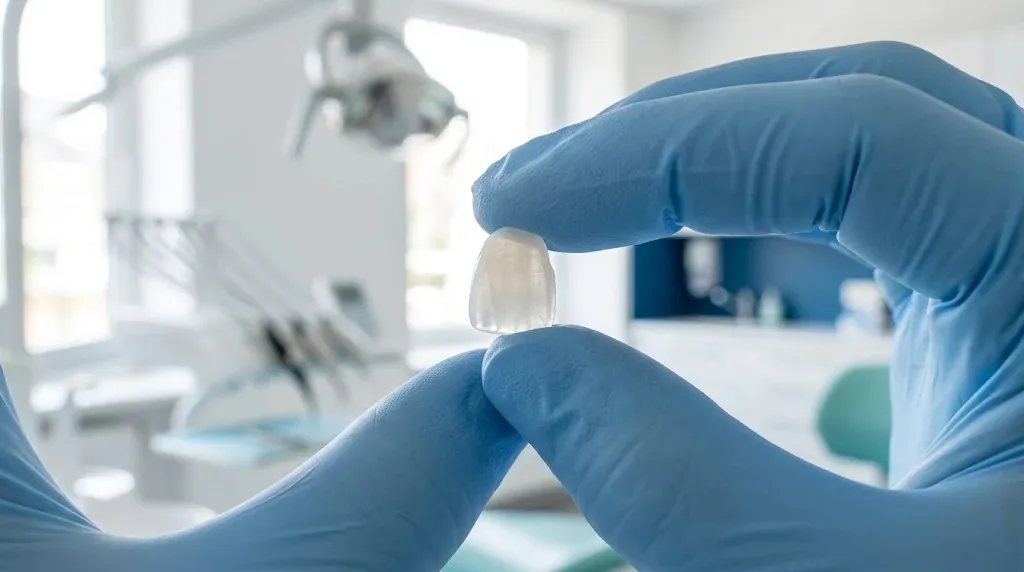
Porcelain vs. composite veneers: differences and how to choose
We compare porcelain and composite veneers on lifespan, aesthetics, number of visits, maintenance and cost to help you decide with your dentist.
 Reviewed byDr. Andreina Armas · Specialist in Oral Rehabilitation and Cosmetic Dentistry6 min read
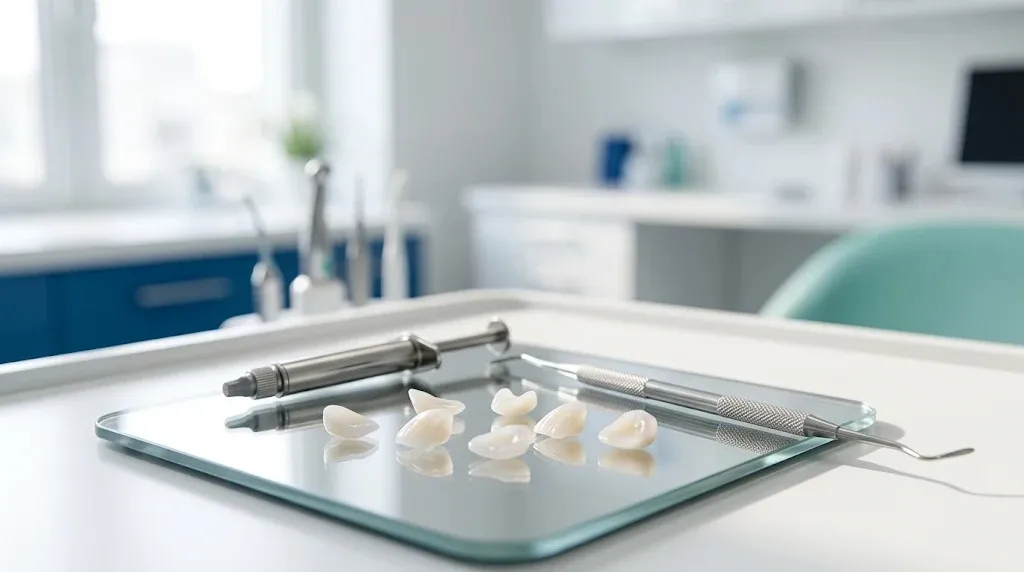
Dental veneers cover the visible surface of a tooth to improve its shade, shape or size. There are two main types: porcelain (lab-made ceramic) and composite (sculpted directly in the mouth). The main difference is lifespan, color stability and number of visits.
Quick comparison
| Porcelain | Composite | |
|---|---|---|
| Average lifespan | 10 to 15 years or more | 5 to 7 years |
| Color stability | Very high, does not stain | May stain over time |
| Visits | 2 to 3 | 1 to 2 |
| Tooth reduction | Minimal, case-dependent | Minimal or none |
| Repair | Usually replaced | Repaired in the office |
| Maintenance | Check-ups | Check-ups and polishing |
| Upfront cost | Higher | Lower |
When is porcelain the better choice?
- When you want a result that stays stable for many years.
- If you often drink coffee, tea or wine and worry about staining.
- For intense stains composite cannot mask well.
- For significant shape changes across several teeth.
Read about porcelain veneers.
When is composite the better choice?
- In younger patients, since it is more conservative and reversible.
- For small corrections: closing a gap, repairing an edge, lengthening a tooth.
- When you need the result in few visits.
- As a first stage before moving to porcelain later.
Read about composite veneers.
Which factors drive the decision?
- Your bite and whether you grind. Both need night-guard protection if you clench.
- Your base shade. Very dark teeth usually need porcelain.
- Your habits and maintenance expectations.
- Your budget and time horizon.
So which one should you choose?
The best veneer is the one that is properly indicated. A specialist in rehabilitation and cosmetic dentistry evaluates your case and explains what to expect from each material. To go deeper, read how long porcelain veneers last and composite veneers: pros and care.
Frequently asked questions
Which looks more natural?
Both can look very natural in a specialist’s hands. Porcelain better mimics enamel translucency and keeps its gloss longer.
Which is cheaper?
Composite costs less upfront. Over time, polishing and possible repairs add up, so the gap narrows.
Can they be combined?
Yes. Some plans use porcelain veneers on certain teeth and composite on others, depending on what each one needs.