

 Porcelain veneers
6 min read
Porcelain vs. composite veneers: differences and how to choose
We compare porcelain and composite veneers on lifespan, aesthetics, number of visits, maintenance and cost to help you decide with your dentist.
Read articleThin, strong ceramic shells bonded to the tooth for a natural, long-lasting look.
Visits
Usually 2 to 3
Lifespan
10 to 15 years or more with good care
Material
Dental ceramic (e.g. lithium disilicate)
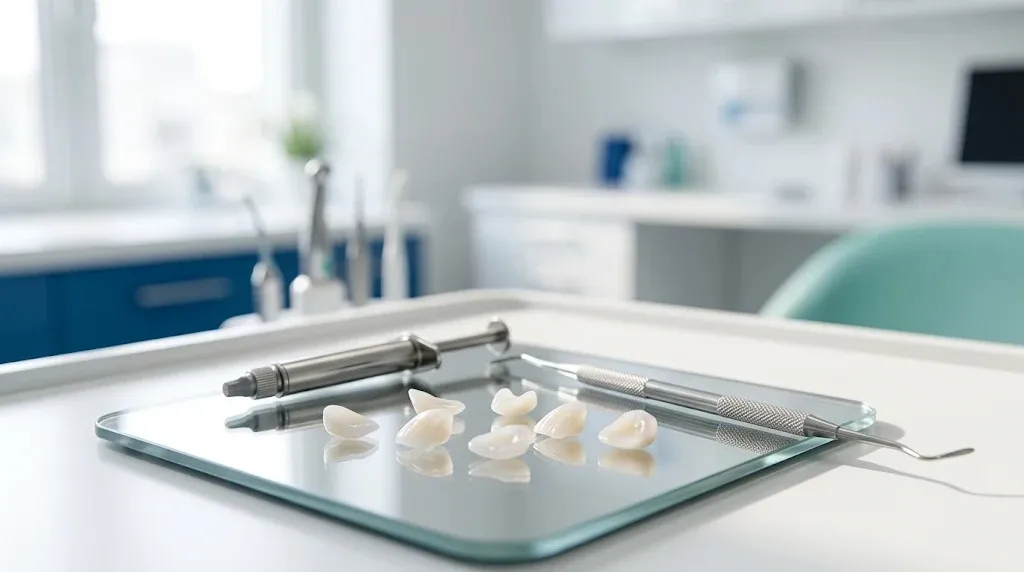
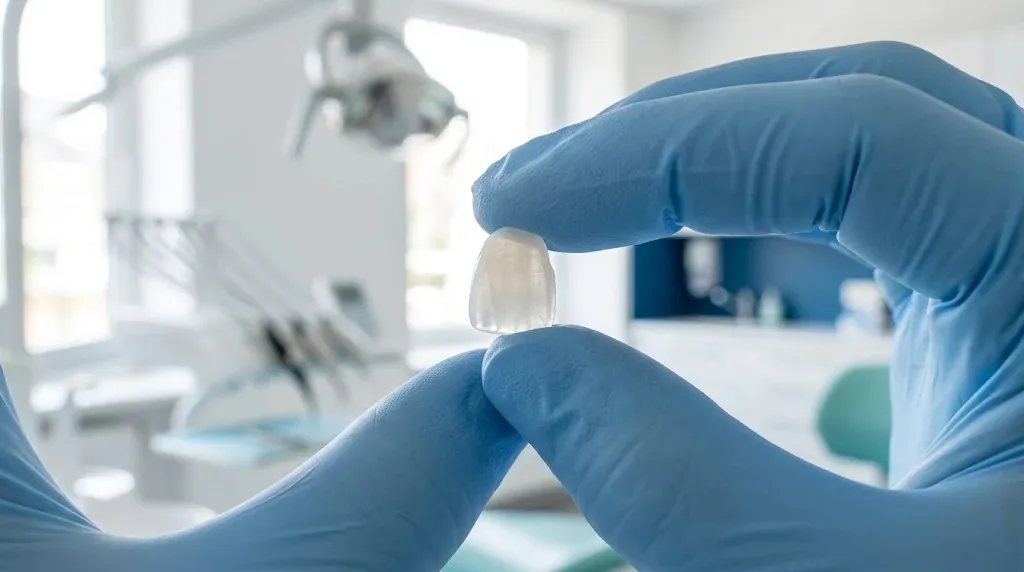
Porcelain veneers are very thin shells of dental ceramic bonded to the visible surface of a tooth to improve its shade, shape, size or position. They are custom-made in a dental lab and cemented with a permanent chemical bond.
They offer the best color stability and longevity in cosmetic dentistry: they do not stain with coffee or wine and they reflect light much like natural enamel.
Ceramic does not absorb pigments, so it keeps its shade over time.
Once bonded to the tooth they withstand normal chewing function.
Translucency and gloss that mimic a natural tooth without looking artificial.
They require minimal enamel reduction, defined case by case.
Shape, size and shade are defined and the design is tested with a mock-up.
The tooth is conservatively prepared and a digital or conventional record is taken.
The lab crafts each veneer while you wear temporaries.
Veneers are tried in, adjusted and permanently bonded. A follow-up visit is scheduled.
With good hygiene, regular check-ups and protection against grinding they usually last 10 to 15 years, and often longer.
In most cases a minimal enamel preparation is done so the veneer does not look bulky. In selected cases it may not be needed; this is defined at the evaluation.
No. Ceramic is a glazed material that does not absorb pigments. What can stain over the years is the bonding margin if hygiene is poor.
Porcelain is lab-made, lasts longer and keeps its color; composite is sculpted directly in the mouth, in fewer visits and at a lower cost, but needs maintenance polishing.
Porcelain veneers6 min read
We compare porcelain and composite veneers on lifespan, aesthetics, number of visits, maintenance and cost to help you decide with your dentist.
Read article Porcelain veneers
5 min read
Porcelain veneers usually last 10 to 15 years or more. Learn which factors extend or shorten their lifespan and the care specialists recommend.
Read articlePorcelain veneers5 min read
Can you get veneers without shaving your teeth? We explain when no-prep veneers are possible, when they are not, and what minimal preparation means.
Read articleFill out this form in under a minute. Sending it opens WhatsApp with your request ready so the doctor’s team can confirm your appointment.
A tailored plan that blends aesthetics and function for a balanced, natural-looking smile.
Learn more
A minimally invasive cosmetic treatment: direct composite restorations sculpted tooth by tooth.
Learn more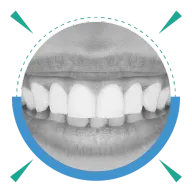
Removes stains and brightens the natural shade of your teeth in a safe, supervised way.
Learn more