Types of dental crowns: zirconia, lithium disilicate and porcelain-fused-to-metal
A guide to dental crown types: zirconia, lithium disilicate (e.max) and porcelain-fused-to-metal. Differences in aesthetics, strength and where each is used.
 Reviewed byDr. Andreina Armas · Specialist in Oral Rehabilitation and Cosmetic Dentistry5 min read
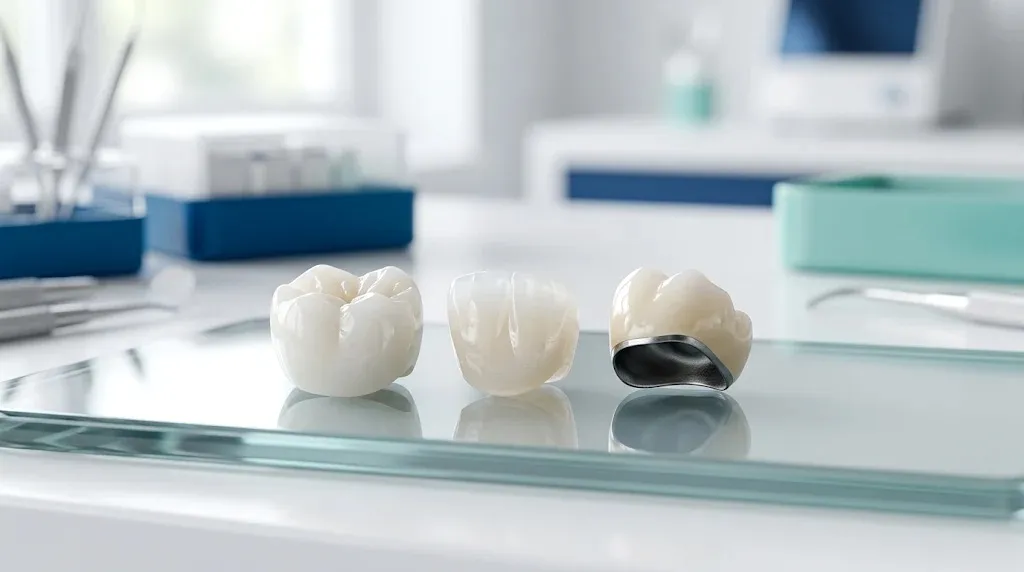
A dental crown is a cap that covers the whole tooth to restore its shape, strength and appearance when it has lost a lot of structure. The most widely used materials today are zirconia, lithium disilicate and porcelain-fused-to-metal (PFM). None is best for everything: each has its place.
Material comparison
| Lithium disilicate | Zirconia | PFM | |
|---|---|---|---|
| Aesthetics | Excellent, very translucent | Very good | Good, can look opaque |
| Strength | High | Very high | High |
| Metal | No | No | Yes |
| Dark line at the gum | No | No | Possible over the years |
| Ideal use | Front teeth, veneers, inlays/onlays | Molars, bridges, implants | Long bridges, specific cases |
Lithium disilicate
A glass-ceramic best known by its most common brand name, e.max. It transmits light much like enamel, making it the favorite in the smile zone. It bonds chemically to the tooth, which allows conservative preparations.
Zirconia
A ceramic of very high strength. It handles chewing forces on molars well and is the usual choice for bridges and implant crowns. Current, more translucent versions also deliver good aesthetics.
Porcelain-fused-to-metal
A metal framework covered with porcelain. It is strong and has decades of clinical use. Its drawback is aesthetic: it is more opaque and, if the gum recedes, a dark line can appear at the edge.
When is a crown needed?
- A tooth badly damaged by decay or fracture.
- A root-canal-treated tooth, which is more fragile.
- Very large fillings that no longer seal.
- On an implant, to replace a missing tooth.
When damage is smaller, an inlay or onlay may be enough and preserves more tooth.
How is the material chosen?
The specialist considers:
- Position of the tooth (front or back).
- Bite force and whether you grind.
- Underlying tooth color, which can show through.
- Available space and remaining tooth structure.
Crowns are part of oral rehabilitation, Dr. Andreina Armas’ specialty. If your case involves several teeth, read full-mouth rehabilitation.
Frequently asked questions
How long does a dental crown last?
On average 10 to 15 years, and longer with good hygiene and check-ups. The most common reason for replacement is decay at the margin.
What is a metal-free crown?
A crown made entirely of ceramic (zirconia or lithium disilicate) with no metal framework. It avoids a dark line at the gum.
Does getting a crown hurt?
No. Preparation is done under local anesthesia. Mild sensitivity for a few days while wearing the temporary is possible.